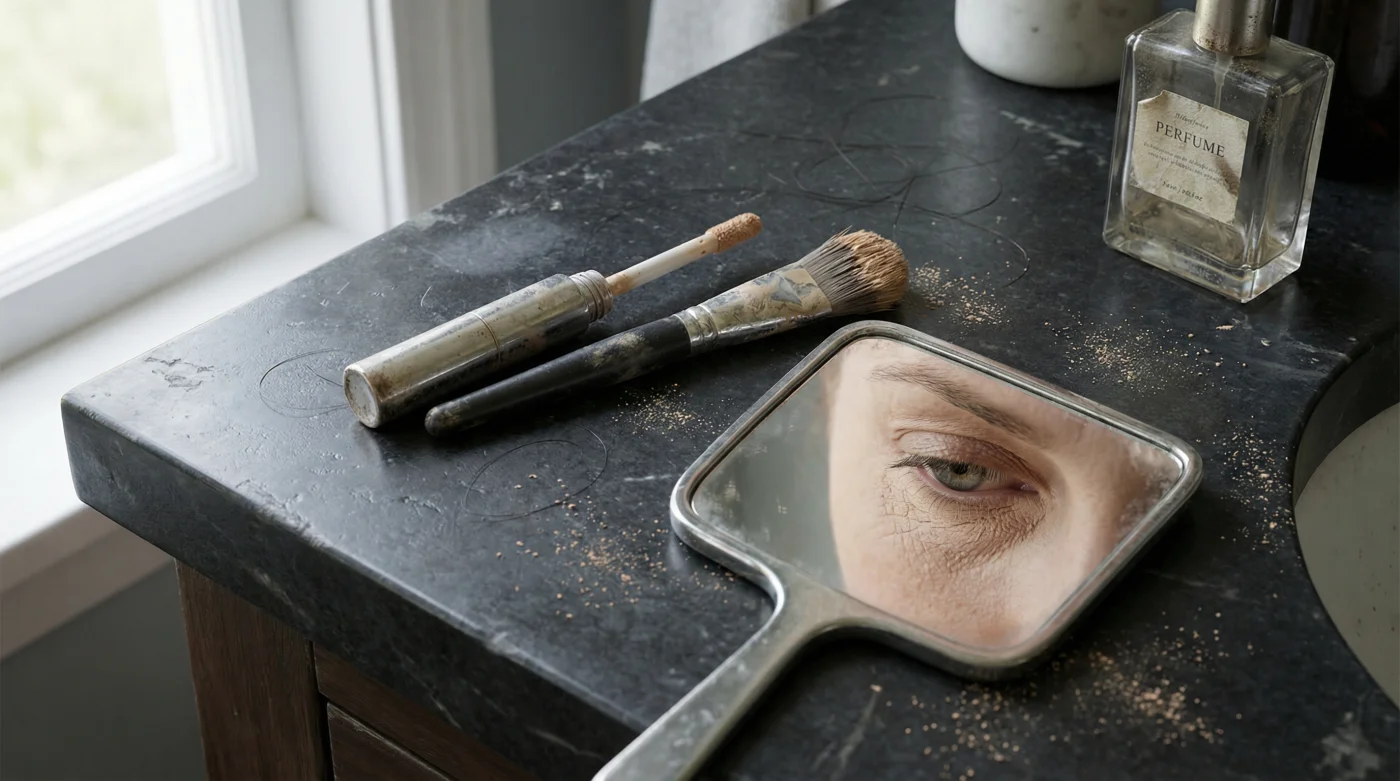
The morning light in your bathroom is rarely forgiving. You stand before the mirror, the cold ceramic of the sink pressing against your hips, twisting the cap off a familiar tube of concealer. You swipe the wand under your eyes, pick up your favorite brush, and drag the bristles from the inner corner toward your temples in a long, satisfying arc. It feels like the right thing to do. It is what we have all watched a thousand times in hurried morning routines.
But almost instantly, the optical illusion collapses. Dragging product across fragile skin creates a texture that wasn’t there five minutes ago. What was supposed to be a luminous veil of rest instead becomes a hyper-detailed map of your history—every late night, every squinted smile, every hour of dehydration suddenly amplified in high definition.
We are taught from an early age to paint our faces the way we would paint the walls of a house: with long, broad strokes to cover the most surface area in the shortest amount of time. But the delicate tissue beneath your eyes is not drywall. It breathes, it shifts, it folds, and it absorbs. It demands a completely different approach to geometry.
The harsh reality of professional application is that concealer brushes were never meant to function like brooms. Sweeping heavily disrupts the texture of the fluid. The bristles act like microscopic rakes, pulling the pigment right out of the hollows where you need it, and piling it directly into the micro-crevices you were desperately trying to conceal.
The ‘Canvas’ Illusion
To fix this, you have to fundamentally change how you view the tool in your hand. If you hold a brush parallel to your face and pull, you are only ever skimming the surface. The liquid pools into the valleys of your fine lines because it has nowhere else to go, creating a stark, crepey appearance within minutes of drying.
Think of the process less like painting a fence and more like pressing seeds into damp soil. Your goal is not to smear a liquid over a surface, but to gently fuse a pigment into the natural lipid layers of your skin. This requires a stippling motion—a vertical, rhythmic tapping that presses the product downward into the pores rather than dragging it horizontally across the delicate epidermal layer.
When you stamp the brush, you are utilizing the blunt ends of the bristles to pack the coverage densely and evenly. You aren’t creating streaks. You are allowing the warmth of your skin to meld with the binders in the makeup, creating a crease-free finish that moves with your expressions rather than cracking against them.
Elise, a 38-year-old editorial artist working the grueling, humid commercial shoots of Miami, used to watch in frustration as her clients’ under-eye areas aged ten years before the camera even flashed. She realized the sweeping motions she had been taught in beauty school were actively sabotaging her work under high-definition lenses. Once she stopped painting and started stamping—treating her brush like a gentle, rhythmic piston—the heavy creasing vanished entirely. It became her quiet industry signature, turning a basic concealer into what looked like an eight-hour sleep.
Adjusting for Your Skin’s Geography
Not all under-eyes are created equal, and knowing your personal topography is critical for mastering this technique. The density of your brush and the pressure of your stippling must adapt to what is actually in front of you.
Everyone’s anatomy requires a slight calibration, and identifying your specific skin geography dictates exactly how you approach the morning routine. Here is how to adjust the stippling method for different structural realities.
The Dehydrated Terrain
If your under-eyes feel tight or look papery before makeup even touches them, your skin will aggressively drink the moisture out of your concealer, leaving only the dry pigment behind to crust. For this geography, use a slightly fluffier, less dense brush. Stipple with incredibly light pressure, almost as if you are dusting pollen onto a flower. You want to deposit the thinnest possible veil of product. Heavy pressing here will only disturb the dry flakes.
The Deep-Set Hollow
Those with a pronounced tear trough often struggle with shadows rather than discoloration. If your eyes are deep-set, sweeping a brush across the hollow actually hollows it out further by removing product from the deepest point. You need a small, incredibly dense, domed brush. Stipple the product specifically into the deepest part of the shadow first, packing it in securely, and only lightly tap the residual product outward. You are building volume through light.
In this scenario, precision is everything. Targeting the shadow over the skin prevents the surrounding, flatter areas from becoming heavily caked in unnecessary product.
The Mature Canvas
For skin that has lived a full life and naturally possesses more fine lines, the stippling technique is an absolute necessity. Sweeping is the enemy of mature skin. Use a soft, medium-density brush and a highly emollient concealer. The pressing motion ensures the emollients fill the spaces evenly without skipping over the peaks of the wrinkles. Work slowly, letting the natural warmth of your face assist in the blending process.
Mindful Application: The Stippling Sequence
Executing this technique requires slowing down. The application should feel rhythmic, almost meditative, grounding you in the physical sensation of the morning rather than rushing toward the exit.
You need the right temperature and the right cadence. Fingertip warmth and gentle tapping are your primary instruments before the tool even makes contact.
The Tactical Toolkit:
- The Tool: A dense, domed synthetic brush (natural hair absorbs too much liquid and does not spring back with enough force for stippling).
- The Temperature: Skin-warmed product. Cold concealer is rigid concealer.
- The Time: A strict 30-second resting period.
Follow this exact sequence for a seamless finish:
- Place a tiny dot of concealer on the back of your hand. Use your ring finger to tap it, warming the waxes and oils for a few seconds.
- Transfer the warmed product specifically to the darkest area of your under-eye. Do not drag it.
- Wait 30 seconds. Letting the product sit allows the volatile alcohols to evaporate, thickening the pigment so it stays exactly where you place it.
- Take your dense brush, hold it perfectly perpendicular to your face, and press straight down. Lift straight up. Repeat this piston motion.
- Slowly move outward in this tapping rhythm until the edges melt into your bare skin.
Beyond the Mirror
Mastering this small mechanical adjustment does more than just alter the way a liquid dries on your face. It changes how you carry yourself through the hours that follow.
When you aren’t constantly excusing yourself to check a mirror, lightly tapping away the gathered makeup in your creases, you regain a profound amount of mental bandwidth. Confidence thrives in unbothered moments, in the quiet assurance that your reflection aligns precisely with the energy you want to project.
It is a tiny shift in your daily geometry—lifting instead of dragging, pressing instead of sweeping. Yet, it respects the delicate architecture of your face. By working with your skin’s natural texture rather than fighting against it, you strip away the daily frustration of makeup that refuses to cooperate, leaving only the polished, vibrant version of yourself to face the day.
“Makeup should never feel like a tug-of-war with your own anatomy; when you press the product into the skin rather than dragging it across, you stop fighting your texture and start collaborating with it.”
| Key Point | Detail | Added Value for the Reader |
|---|---|---|
| The Bristle Rake Effect | Sweeping motions use bristles to pull product out of pores and into fine lines. | Prevents instant aging and crepey textures right after application. |
| The Stippling Piston | Pressing the brush vertically packs pigment densely without horizontal streaking. | Ensures long-lasting, crease-free coverage that moves with facial expressions. |
| The 30-Second Cure | Letting the fluid rest on the skin before blending evaporates excess moisture. | Maximizes coverage using less product, preventing a heavy, cakey look. |
Frequently Asked Questions
Should I wet my concealer brush before stippling?
No. Unlike a sponge, a wet brush dilutes the concealer’s binders, causing the pigment to separate and settle into lines much faster. Keep the brush dry and rely on the product’s natural emollients.Why does my concealer still crease even when I stipple?
You may be using too much product, or skipping the 30-second resting phase. Apply half the amount you think you need, let it slightly thicken, and then press it in.Can I use this pressing motion with a beauty sponge instead?
Yes, a damp sponge naturally mimics a stippling motion. However, a dense brush provides much higher coverage because it doesn’t absorb the product the way a porous sponge does.How often should I wash a stippling brush?
Because you are packing liquid deep into the bristles, wash it at least once a week. Product buildup at the base of the brush will make the bristles stiff and completely ruin the soft pressing effect.Does setting powder ruin the stippled finish?
Only if you sweep the powder. To maintain the smooth canvas, you must press or roll a very light dusting of powder over the area using a soft puff, continuing the same vertical geometry.