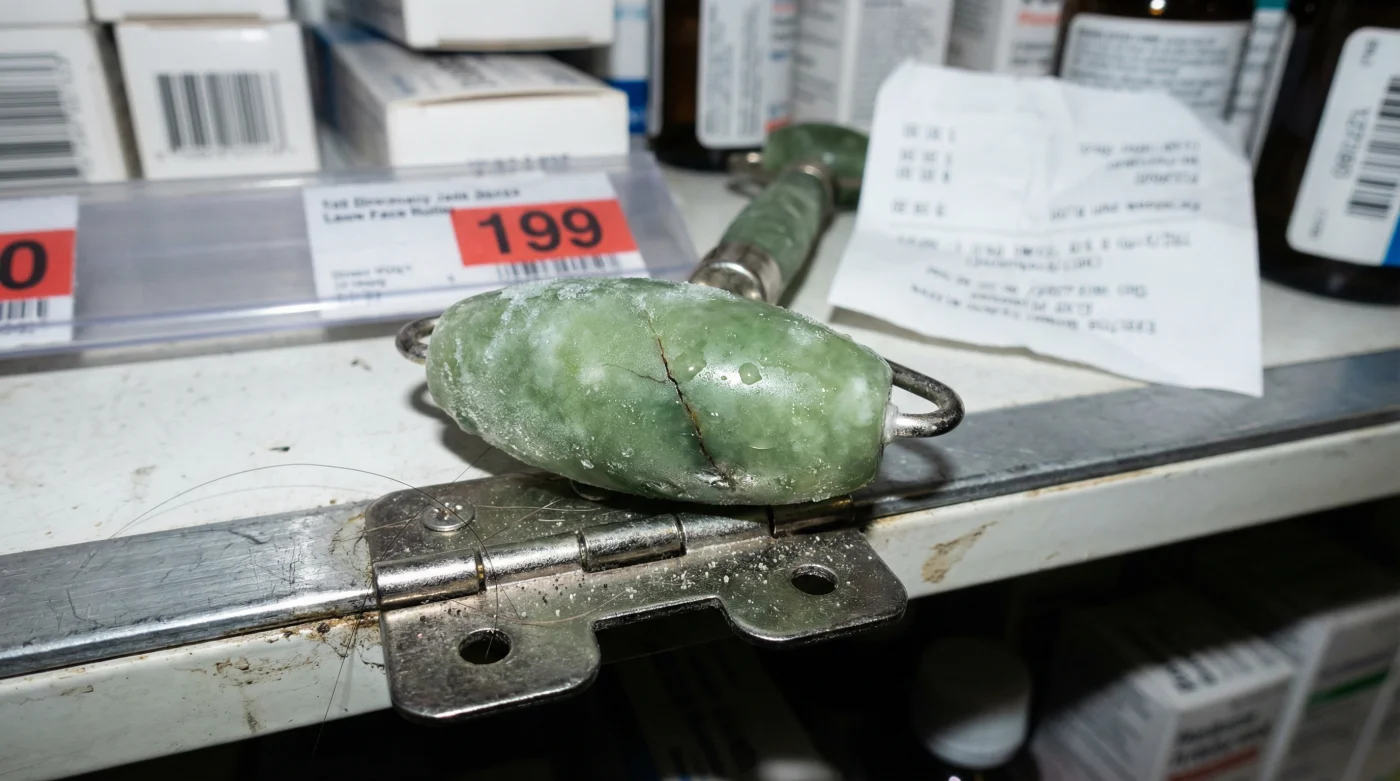
The morning kitchen is quiet, save for the low, steady hum of the refrigerator. You reach past the carton of almond milk and the wilting greens to grab your morning savior: a frosted green stone, heavy and chilled to the bone. You expect the immediate relief of erasing a restless night from your face, wiping away the shadows and the swelling before your first cup of coffee is even brewed. It has become an automatic reflex, a daily ritual to reset your appearance.
As the heavy stone makes contact, the chill feels immediately soothing against the natural warmth of your sleep-flushed cheeks. You drag it upward, tracing the hard lines of your cheekbones and sweeping under your heavy eyes, waiting for the swelling to recede. The biting temperature tricks your brain into feeling awake, creating a bracing illusion of health and tightness that lasts just long enough to apply your morning moisturizer.
We have been taught that aggressive cold is the undisputed enemy of puffiness. You likely treat your morning face the exact same way a physical therapist treats a sprained ankle, applying ice to force the fluid away and freeze the tissue into tight submission. The beauty industry has relentlessly promoted the refrigerator as the ultimate resting place for facial tools, promising that a lower temperature guarantees a superior result.
But beneath the surface, you are triggering structural skin damage disguised as a refreshing, harmless ritual. The standard expectation is a brisk, depuffing miracle that leaves you looking effortlessly sculpted; the professional reality is a traumatic thermal shock to your face’s most fragile infrastructure. Every time that frozen stone touches your warm skin, a silent, microscopic panic ripples through your cheeks.
The Glass Tube Effect
The logic seems entirely sound on the surface: cold constricts blood vessels, effectively pushing excess fluid out of the facial tissues and reducing the physical volume of puffiness. Yet, this aggressive freezing entirely ignores the biological limitations of the delicate microscopic networks keeping your complexion flushed and alive. You are forcing a rapid biological reaction that your face was never designed to endure on a daily basis.
Think of your facial capillaries as fragile, warm glass tubes. When you take a sub-freezing, dense piece of stone and drag it across them, the sudden, violent drop in temperature forces them to spasm uncontrollably. Just like pouring ice water into a hot glass straight from the dishwasher, the walls of these tiny vessels simply cannot withstand the rapid, violent contraction. They stretch, they shock, and eventually, they snap entirely.
The very tool you bought to clear your complexion and smooth your features is actively leaving behind a permanent road map of tiny red spider veins. The brisk, numbing sensation you feel upon application is not the feeling of tightened pores or stimulated collagen; it is the feeling of localized tissue panic. You are trading a temporary reduction in morning fluid for permanent vascular scarring that will slowly map its way across your nose and cheeks.
Dr. Elena Rostova, a 48-year-old vascular esthetician working out of a quiet, sunlit studio in Chicago, maps this exact pattern every single winter. She sees the damage clearly when you look closely at the delicate broken webbing across a distressed client’s cheeks. She calls this phenomenon refrigerator rosacea, a completely self-inflicted condition born entirely from trending beauty advice rather than dermatological science.
Stone holds cold entirely differently than an ordinary ice cube, Elena notes, adjusting a steamed towel in her quiet studio while the scent of bitter orange hangs in the air. It acts as a dense thermal battery, holding the freezing temperatures much longer. It creates a localized freeze-burn under the skin before your superficial pain receptors even register the danger, pushing the capillaries past their breaking point in a matter of seconds.
Once those fragile vessels rupture under the freezing weight of the stone, no soothing serum or rich night cream in the world can stitch them back together. The redness becomes a permanent, frustrating daily resident on your complexion, stubbornly shining through your foundation and requiring expensive, painful laser treatments to finally clear away. The pursuit of perfection inadvertently creates the exact redness you spend so much time trying to conceal.
Rethinking the Chill: Segmenting Your Routine
If you want the satisfying physical release of moving stagnant fluid without the trauma, you have to adapt your method. Not all tissue handles temperature shifts the same way, and stepping away from the refrigerator requires a new, tailored approach to how you handle your tools.
For the Highly Reactive
For those whose cheeks flush easily after a hot shower or a quick run, your blood vessels are sitting closer to the surface. This makes them incredibly susceptible to thermal shock. Ditch the cold entirely and rely on the natural density and weight of the stone at room temperature. The physical weight is enough to prompt lymphatic movement.
For the Morning Depuffer
If you wake up holding fluid and desperately crave that tightening effect, run your tool under cool tap water for ten seconds. This drops the temperature just enough to stimulate drainage without crossing into the danger zone. It should feel like a brisk spring morning, not a frozen lake in the dead of winter.
For the Chronic Tension Holder
Many people use freezing stones to numb the dull ache of nighttime jaw clenching. But extreme chill causes muscles to contract even further. You need the tool to be slightly warm to melt the tension. Resting the stone in a bowl of warm water transforms it into a heated massage tool that actually releases the masseter muscle.
The Room-Temperature Reset
Let go of the kitchen appliance habit. The true power of any facial massage tool lies in mindful, manual manipulation, gently coaxing water toward the exit points at the base of your neck. It is a mechanical process, not a thermal one, relying entirely on the precision of your own hands.
To do this effectively, you only need a feather-light, rhythmic touch to sweep stagnant fluid out of your facial tissues. Imagine trying to slide a coin across the surface of soft butter without leaving a dent. That is the exact pressure required to move the fluid without crushing the fragile skin barrier below.
- Start at the center of your neck, rolling downward toward your collarbones to open the drainage pathways before you ever touch your face.
- Move to the jawline, sweeping outward from the chin toward the soft space just beneath your earlobes to clear overnight swelling.
- Sweep from the sides of the nose outward across the cheekbones, keeping the stone perfectly flat against the skin rather than digging the edge in.
- Store your tool in a dry, room-temperature drawer, wiping it clean with a damp microfiber cloth and a single drop of gentle soap after each use.
The Tactical Toolkit for this method requires nothing more than cool tap water hovering around 65 degrees Fahrenheit, three minutes of slow, intentional strokes, and two drops of squalane oil for glide. You are simply helping your body do what it already naturally wants to do.
Respecting the Infrastructure
We often mistake harsh sensations for genuine effectiveness. If a product stings, burns, or freezes, we automatically assume it is working hard to fix our physical flaws. But true physical care is about structural preservation, not aggressive punishment. Your face does not need to be shocked into looking awake or vibrant.
Stepping away from the ice-cold tools forces you to listen to your skin rather than bully it into submission. You begin to appreciate the gentle, quiet mechanics of your own body, moving fluid through patience rather than brute force. The entire routine shifts from a harsh wake-up call to a grounding morning meditation.
When you stop freezing your face into a temporary panic, you allow your circulation to deliver steady, oxygen-rich blood that creates a real, lasting flush from within. The morning routine becomes less of a daily assault on your capillaries and more of a quiet, nurturing dialogue with yourself, leaving your complexion genuinely healthy rather than just temporarily numb.
Your skin is a delicate organ, not a piece of marble to be chiseled and frozen; treat it with the warmth it requires to actually heal.
| Key Point | Detail | Added Value for the Reader |
|---|---|---|
| Temperature Shock | Sub-freezing stone causes violent capillary spasms. | Prevents permanent spider veins and irreversible redness. |
| Pressure Control | Feather-light touches move fluid without bruising tissue. | Ensures proper lymphatic drainage without stretching the skin. |
| Tool Maintenance | Store at room temperature and clean with microfiber. | Extends the life of the tool and prevents bacterial breakouts. |
Frequently Asked Questions
Is it ever safe to put my jade roller in the fridge? If you absolutely must have a cooling sensation, place it in the fridge for no more than two minutes, ensuring it is slightly chilled but nowhere near freezing.
Can spider veins from cold shock be reversed? Unfortunately, once a capillary is broken, it cannot heal itself; you will need to see a dermatologist for laser therapy to dissolve the broken vessel.
Does room temperature jade still depuff the eyes? Yes, the physical rolling motion and the natural density of the stone are what actually push the fluid out of the tissue, not the temperature.
How hard should I be pressing the tool into my face? Keep it incredibly light, roughly the pressure you would use to move a coin across soft butter without denting it.
Should I use oil or serum with my roller? Always use a few drops of facial oil like squalane or jojoba to create slip; dragging dry stone across your face will tug and damage the skin barrier.