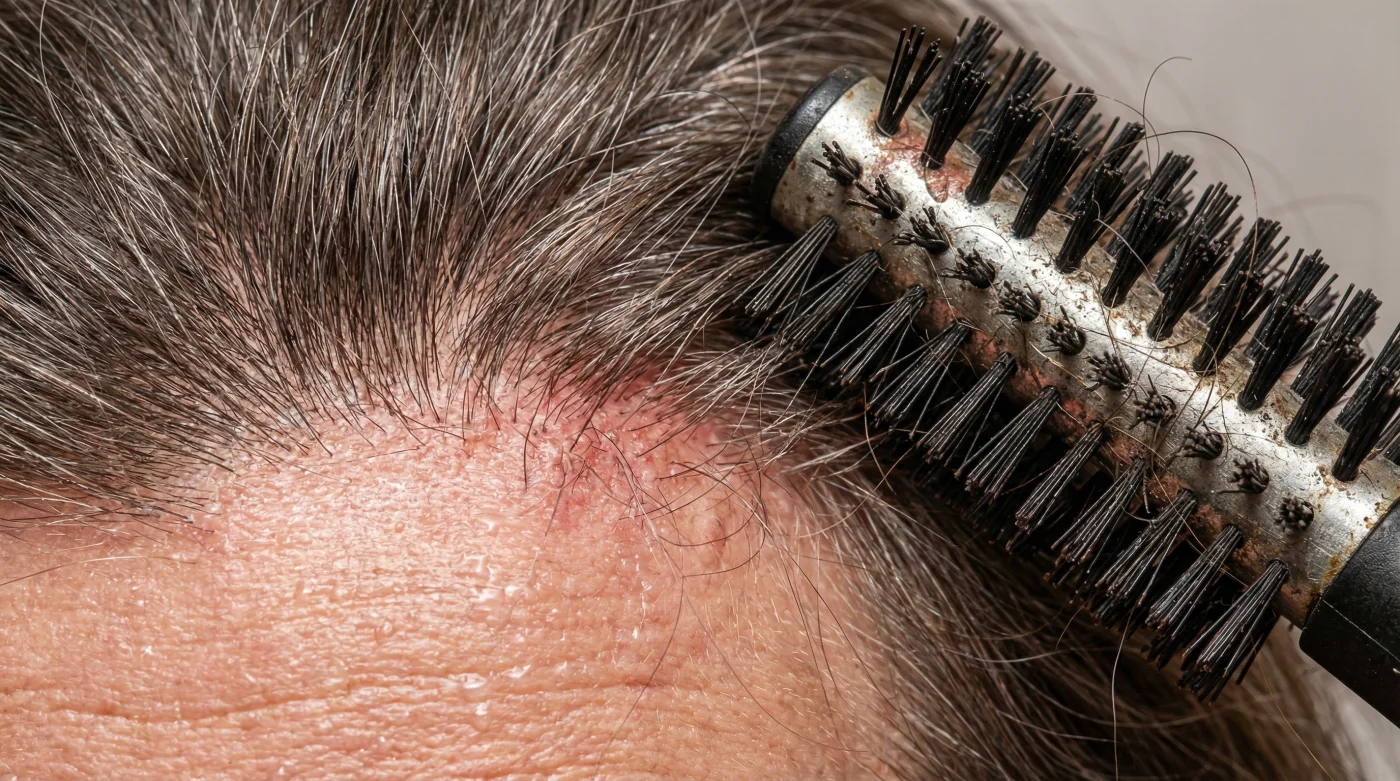
The bathroom mirror fogs just slightly at the edges as the steady, familiar hum of your 1800-watt dryer fills the space. You section off that front piece, wrapping it tight around a wooden boar-bristle brush, pulling upward and outward. It is a morning ritual etched into muscle memory, smelling faintly of toasted argan oil and aerosol hairspray. You are chasing that specific, sweeping architecture—the iconic, bouncy volume that defined magazine covers in the mid-nineties.
For decades, that signature blowout felt like a protective armor. You learned the physical rhythm of the roll, the blast of heat, and the sudden cool shot to set the shape. It was a harmless luxury, a way to build structure into strands that felt increasingly flat. But beneath the surface of that lifted root, a quiet distress signal has been going off unnoticed.
New clinical observations are dismantling everything we assumed about creating that timeless bounce. The very technique responsible for those sweeping layers—relentless upward tension combined with directed heat—is proving to be a catalyst for irreversible damage. What we viewed as basic grooming is actually applying structural stress to follicles that are quietly shifting in their biological makeup.
The Tension Trap Beneath the Glamour
Think of your hair follicles like tiny, delicate anchors resting in shifting soil. In your twenties and thirties, that soil is densely packed. The root holds its ground against the aggressive tug of a round brush. But as estrogen levels drop during perimenopause and menopause, the structural integrity of your scalp changes. The follicle itself miniaturizes, and the anchor loosens.
The new data highlights a frustrating irony for women seeking fuller hair. The intense, repetitive pulling required to mimic that classic volume is accelerating a specific type of hair loss known as traction alopecia. When you wrap that section tightly and pull away from the scalp to build lift, you are slowly uprooting the hair, much like pulling a fragile sapling by its leaves. It is not snapping the strand; it is extracting the foundation.
Elise Thornton, a 48-year-old master stylist turned trichologist based in Chicago, watched this exact pattern unfold across hundreds of styling chairs. She noticed clients coming in every six weeks for color and a blowout, complaining that their hairline felt thinner and their parts wider. Elise began tracking the correlation between her clients who religiously practiced the high-tension round brush technique and those showing signs of follicular scarring. She quickly realized that treating menopausal hair like it was still twenty-five was the exact habit destroying their density.
Adapting the Volume by Hair Profile
You do not have to abandon the desire for a beautiful shape, but you do need to change the mechanics of how you build it. Adjusting your daily routine means recognizing the current reality of your hair profile and treating it with a lighter touch.
For the Fine and Fragile: If your strands are already whisper-thin, heat and tension are a disastrous pair. Your follicles cannot withstand the torque of a medium-barrel brush. Rely on product memory rather than physical manipulation. Setting lotions and lightweight mousses applied to damp roots will do the heavy lifting that your brush used to handle.
For the Dense but Thinning: Perhaps you still have a lot of hair, but you notice more shedding in the shower or a widening at the crown. Your scalp needs a mandatory recovery period from the mechanical stress. You can still use a dryer, but your hands should replace the brush for the first eighty percent of the drying process. Move the hair gently, focusing the air at the root without pulling the lengths.
For the Compromised Hairline: If traction alopecia is already visible around your temples or forehead, the round brush must be completely retired from those zones. The hair framing your face is historically the weakest. Shift your gentle focus to side parts or soft, face-framing layers that air-dry naturally into a wave, requiring zero tension to look polished.
Building Lift Without the Leverage
Trading the brush for passive drying might feel like a compromise, but this perceived lack of effort is actually your greatest biological advantage. By stepping away from the styling tug-of-war, you allow the scalp to rest and the follicles to re-anchor. You are trading raw force for strategic placement.
- Rough dry until damp: Use your fingers to lift the roots while keeping the dryer moving constantly, never letting the heat sit on one spot.
- Switch to velcro rollers: Set the crown with rollers while the hair is warm, allowing it to cool and memorize the shape without any pulling at the root.
- Embrace the cool shot: If you must smooth the ends with a brush, do it only on the bottom inches, using cold air to seal the cuticle without baking the tension into the strand.
- Root clipping: Use metal prong clips at the crown on damp hair to establish upward direction as it air dries.
The tools you keep on your vanity should reflect this gentler philosophy. Swap the rigid bristles for an open-vented brush that refuses to grip the hair too tightly. Maintain your dryer temperature below 300 degrees Fahrenheit, and ensure your styling cream is providing slip rather than sticky resistance.
A Softer Approach to Your Silhouette
Releasing your grip on the traditional blowout is more than just a styling adjustment; it is an act of bodily preservation. We spend years trying to force our biology to conform to an aesthetic standard that was never designed for longevity.
When you stop fighting the natural fall of your hair and start supporting its changing needs, the anxiety of shedding begins to fade. Letting go of tension at your scalp is a profound relief. The volume you achieve may look slightly different—softer, less rigid, breathing through a pillow of natural texture—but it will be sustained by roots that are healthy, resting securely in a scalp that is no longer under siege.
Volume should be a gentle suggestion to the strand, not a forced extraction from the scalp.
| Styling Habit | The Hidden Reality | Your New Advantage |
|---|---|---|
| High-Tension Round Brushing | Pulls miniaturized menopausal follicles from the root, causing permanent scarring. | Using passive cooling sets preserves hairline density and scalp health. |
| Boar Bristle Gripping | Creates intense friction and leverage that weakened hair cannot withstand. | Switching to slip-focused vented brushes prevents mechanical breakage. |
| Direct Heat at the Root | Bakes the tension into the follicle, exacerbating traction alopecia. | Relying on root clips and air-drying builds volume without heat trauma. |
Does this mean I can never use a hair dryer again?
Not at all. The issue is the combination of intense pulling and high heat. Rough drying with your fingers on a warm setting is perfectly safe.Will my hair ever recover from traction alopecia?
If caught early before the follicle scars over entirely, giving your scalp a break from tension can allow resting hairs to return. Severe cases may be permanent.Are hot rollers a safer alternative for volume?
Yes, provided they are not pulled tightly against the scalp. The gentle heat of a velvet-flocked roller sitting loosely at the root causes far less stress than a dragged brush.Why didn’t my stylist warn me about this?
Styling education often focuses heavily on achieving the visual result. The long-term dermatological impact of tension on aging scalps is a newer clinical focus.What products help build tension-free volume?
Look for lightweight, alcohol-free volumizing foams and root-lifting sprays that create invisible scaffolding between strands without weighing them down.