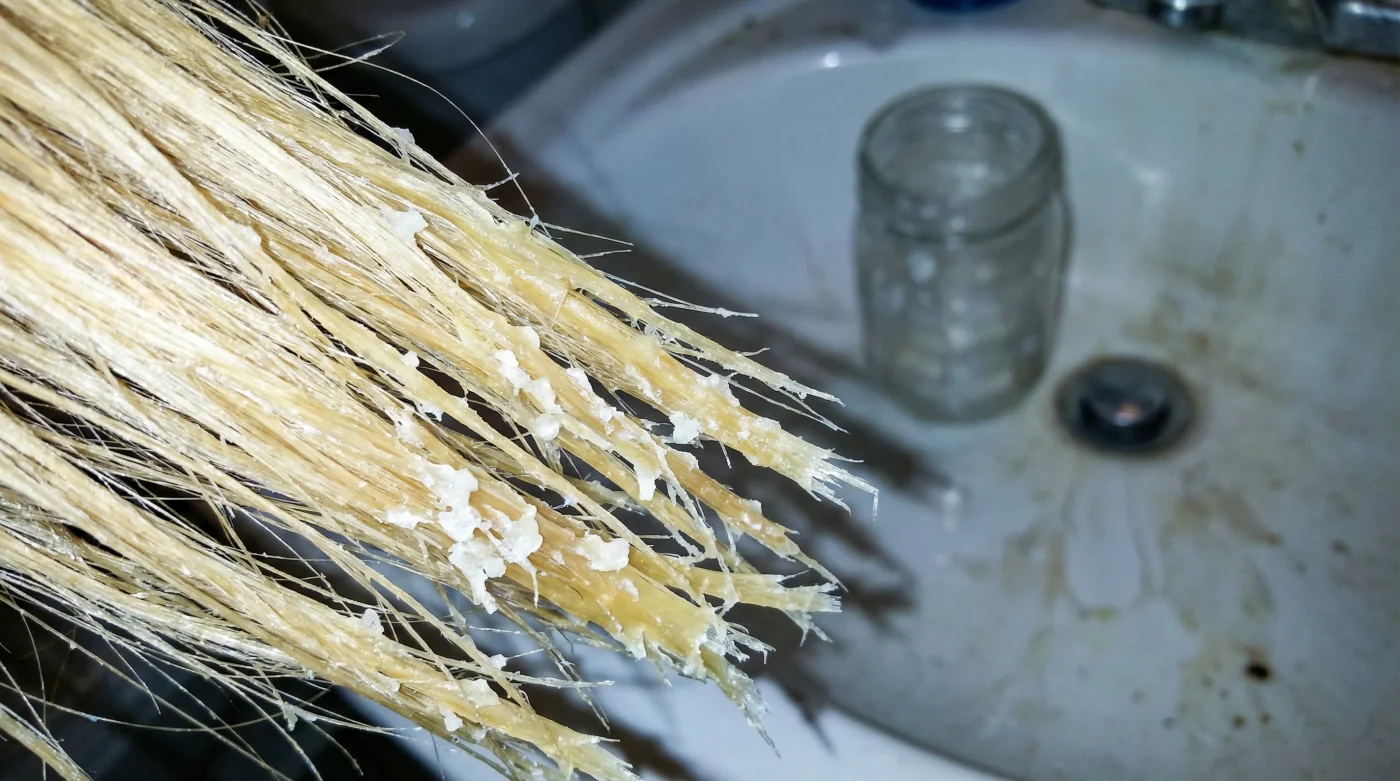
You scoop a heavy dollop of solid white oil from the jar, melting it between your palms until it smells like a high-summer vacation. It feels rich, thick, and deeply nourishing as you rake it through your damp, bleached lengths. You wrap your head in a warm towel, expecting the magic of nature to restore that salon-fresh silkiness you lost somewhere between the toning gloss and the curling iron.
But the reality feels completely different when you finally rinse it out. Instead of the buttery softness you anticipated, your fingers catch on stubborn, rough tangles.
The ends of your hair feel oddly rigid, almost like dried broom bristles. Every time you run a brush through, you hear that tiny, terrifying sound of snapping strands. The beauty blogs swore this was the miracle cure for chemical damage, yet your blonde hair feels drastically worse.
The Suffocation of the Strand
We need to rethink how oil actually interacts with a compromised hair cuticle. Imagine trying to hydrate your body by putting on a heavy rubber raincoat before stepping into a shower. The water bounces right off. That is exactly what happens when you slather heavy lauric acid onto bleached hair.
Coconut oil is not a hydrating ingredient. It is an occlusive sealant.
When you lighten your hair, the bleaching process strips away the protective outer layer, leaving the strand highly porous and desperate for water. But coconut oil molecules are notoriously large and uniquely structured to bind with the natural proteins in your hair. Once they attach, they form an impenetrable shield. Instead of drinking in moisture from your conditioner, your hair is suffocating behind a wall of fat. This traps the existing protein inside the shaft while blocking out any water, leading to a condition known as protein overload. Your hair doesn’t need more structure; it needs flexibility.
Sarah, a 42-year-old master colorist running a sunlit studio in Austin, sees this exact tragedy play out every summer. “I have clients sitting in my chair, crying over breakage after using organic coconut oil masks for a month,” she explains while mixing a customized gloss. “They think they are feeding their hair, but they are actually starving it.” Sarah regularly has to perform intense clarifying treatments just to chip away the waxy buildup before she can even begin to repair the severe dehydration underneath. Her secret to fixing bleached hair isn’t found in the baking aisle—it requires mimicking the hair’s natural moisture balance with lighter, water-soluble hydrators.
The true fix requires mimicking natural moisture balance rather than shellacking the strand.
Rethinking Your Routine by Hair Type
Not all blondes experience this brittleness at the exact same rate, which means your recovery strategy needs to match your specific texture.
For the Fine, Delicate Blonde
Your hair already lacks structural weight, making it highly susceptible to snapping under the heavy coating of coconut oil. You need humectants, not heavy lipids. Swap out pantry oils for aloe vera juice or lightweight hyaluronic acid serums applied directly to wet hair.
Switch to lightweight water-binding humectants to restore movement.
For the Coarse, Bleached Curl
Curly hair naturally craves oil, but bleached curls need oils that penetrate rather than coat. You require a lipid that slips past the cuticle. Argan or sweet almond oil has a much smaller molecular weight, offering that necessary slip without locking out water.
For the Frequent Heat Styler
If you are using hot tools at 350 degrees Fahrenheit over a layer of residual coconut oil, you are practically deep-frying your hair. You need a dedicated heat protectant that evaporates cleanly, leaving behind only amino acids to buffer the heat.
Avoid deep-frying your fragile ends with lingering heavy oils.
The Moisture Recovery Method
- US Customs bans specific Shein clothing shipments over material violations.
- Sephora restricts anti-aging purchases for preteens under new guidelines.
- Coconut oil masks create brittle hair shafts for blondes.
- Dry cleaning cashmere sweaters guarantees permanent fiber damage quickly.
- UV gel manicures weaken nail beds through this removal mistake.
The Tactical Toolkit:
- Water Temperature: 98 degrees Fahrenheit (lukewarm, never hot).
- Clarifying Agent: A gentle chelating shampoo.
- Hydration Phase: A water-based, protein-free deep conditioner.
First, wash away the buildup. Use a dime-sized amount of a gentle clarifying shampoo, focusing only on the roots and letting the suds wash gently over the lengths.
You must break down the waxy barrier gently.
Next, apply a generous handful of a water-based, protein-free conditioner. Squeeze the product into the strands using a soft pulsing motion, almost like you are working a delicate sponge.
Let this sit in a warm, steamy bathroom for exactly fifteen minutes. The ambient humidity helps swell the cuticle just enough to let the moisture slip inside.
Trap the hydration inside with a final cool rinse.
Finding Freedom in Fluidity
Letting go of the coconut oil myth is about more than just switching out a product in your shower routine. It is a shift in how you care for things that are fragile. We often think that damage requires heavy, protective armor to fix it. We slather on the thickest, richest paste we can find, hoping to glue the broken pieces back together.
Real strength comes from flexibility and gentle care.
But real resilience doesn’t look like a rigid, unbreakable shield. It looks like movement. It looks like strands that can bend without snapping, hair that catches the light because it is breathing freely, not because it is coated in grease. When you stop suffocating your hair under layers of good intentions, you finally give it the space it needs to drink, to heal, and to sway.
“Hydration is about letting water in, not building a wall to keep it out; treat your hair like a living plant, not a piece of furniture needing polish.”
| Key Point | Detail | Added Value for the Reader |
|---|---|---|
| Protein Overload | Coconut oil traps existing protein and locks out water. | Explains exactly why bleached hair snaps instead of stretching. |
| Molecule Size | Lauric acid is too large to easily pass through the cuticle. | Helps you choose the right oils (like Argan) for proper absorption. |
| Moisture Delivery | Hydration requires water and humectants, not fats. | Saves you money on heavy masks by focusing on lightweight water-binders. |
FAQ
Why did coconut oil work for me before I went blonde?
Virgin, unbleached hair has an intact cuticle that can handle heavy oils without suffocating. Bleaching changes the physical structure of the strand, making it highly porous and prone to protein overload.Can I still use coconut oil on my scalp?
Yes, you can use it on your scalp as a pre-wash treatment if you suffer from dry skin, but you must carefully shampoo it out to ensure it doesn’t run down and coat your fragile ends.How do I know if my hair has protein overload?
If your hair feels stiff, dry, straw-like, and snaps immediately when lightly pulled instead of stretching slightly, you are likely dealing with protein overload.What is the fastest way to remove coconut oil buildup?
Use a clarifying shampoo with a slightly higher pH or a gentle apple cider vinegar rinse to break down the lipid barrier without aggressively stripping the hair.Which oil is actually safe for bleached hair?
Look for lightweight, penetrating oils with smaller molecular structures, such as Argan oil, sweet almond oil, or jojoba oil, applied sparingly to damp hair.