You stand at the counter of your local cleaner on a crisp Tuesday morning, inhaling the sharp, metallic tang of perchloroethylene. The bell above the door chimes, and you hand over a stack of winter wear, placing a favorite cashmere sweater right on top. The stiff white tag sewn into the neckline offers a stern, capitalized command to dry clean only. You trust the tag. You assume the manufacturer knows best, and you walk away feeling like a responsible adult handling your wardrobe with care.
You pay the premium, assuming you are protecting an investment from moth holes and stretching. But behind the counter, that soft goat hair is about to be tossed into a steel drum, drenched in an industrial degreaser, and baked at high heat to evaporate the chemicals. What feels like responsible luxury maintenance is actually accelerating permanent fiber damage. The very process designed to clean the garment is systematically breaking down its structural integrity.
Cashmere is fundamentally biological. It comes from the downy undercoat of a specific breed of goat, relying on microscopic, overlapping scales and natural lipids to remain soft, warm, and resilient against the elements. When you submit those delicate animal threads to a commercial dry cleaning process, you are actively stripping away the very oils that give the garment its famous buttery texture. You are forcefully dehydrating the fabric.
After two or three trips to the cleaner, the sweater begins to feel oddly coarse against your skin. The rich, vibrant dye looks slightly muted, the collar loses its bounce, and the body begins to pill aggressively under the arms. You blame the manufacturer for a drop in quality or assume you just wore it too hard, but the truth is hidden in the chemical bath. The sweater isn’t wearing out; it is drying out.
The Perspective Shift: Treating Fabric Like Biology
To maintain luxury knitwear correctly, you must stop viewing it as a manufactured synthetic good and start treating it like human hair. If you wouldn’t soak your own head in harsh chemical solvents and sit under a blistering heat lamp, you shouldn’t subject your sweaters to the exact same treatment. The care label exists almost entirely to protect the brand from liability if you accidentally shrink the garment in a hot, turbulent washing machine. It is not written to tell you the optimal way to preserve the delicate fibers.
Think of cashmere like a delicate skin barrier in the dead of winter. It requires hydration, gentle cleansing, and physical respect to maintain its elasticity and bounce. By shifting your perspective from following rigid, mass-market instructions to understanding the natural system, you instantly bypass the most common cause of premature wear. You stop fighting the fabric and start working with its biological properties.
Elena is a sixty-two-year-old textile conservator working out of a small, sunlit studio in Manhattan’s garment district. She routinely restores 1940s knitwear and handles museum-grade historical garments with bare, un-gloved hands. If you ask her about the best dry cleaner in the city for high-end woolens, she laughs, shakes her head, and points to a dented fiberglass utility sink in the corner of her workspace. Her entire preservation process relies on cold tap water and a drugstore bottle of yellow Johnson’s Baby Shampoo.
She explains the logic while pressing a soapy thumb against a stained cuff, treating the material with a calm, familiar reverence. You wash it gently, you rinse it clean, and you lay it flat to rest. The baby shampoo is formulated to be pH-balanced and incredibly mild, making it the perfect lipid-preserving cleanser for fine animal fibers. It cleans without stripping, leaving the microscopic scales perfectly intact and naturally conditioned.
Adjusting Your Approach for Different Scenarios
Not every sweater requires the exact same touch. Understanding the current state of your garment allows you to tweak the variables for the absolute best result. The baseline remains the same—water and mild baby soap—but the execution shifts based on the sweater’s recent history, the environment it has been worn in, and the specific type of soiling it has encountered.
For the everyday wearer dealing with minor perspiration or stale indoor air, a quick, ten-minute soak is completely sufficient. You aren’t trying to scrub heavy dirt from the threads; you are simply allowing the water to lift the environmental dust out of the microscopic scales. A gentle plunge, a short rest, and the fabric is fully refreshed and ready for drying.
For the vintage rescuer who just brought home a thrifted piece that feels compacted, stiff, or slightly brittle, the fibers need a bit more coaxing. You can add a single tablespoon of standard white vinegar to the final rinse water. The mild acidity naturally neutralizes any lingering alkaline soap residue and helps the hair scales lie completely flat, actively restoring that signature drape and physical softness.
- US Customs bans specific Shein clothing shipments over material violations.
- Sephora restricts anti-aging purchases for preteens under new guidelines.
- Coconut oil masks create brittle hair shafts for blondes.
- Dry cleaning cashmere sweaters guarantees permanent fiber damage quickly.
- UV gel manicures weaken nail beds through this removal mistake.
Mindful Application: The Cold-Water Ritual
Washing your own sweaters is a quiet, rhythmic process that grounds you in the present moment. It forces you to slow down and physically interact with the things that keep you warm. You will need a clean sink or plastic basin, a large, dry, fluffy bath towel, and twenty minutes of uninterrupted time to complete the process properly.
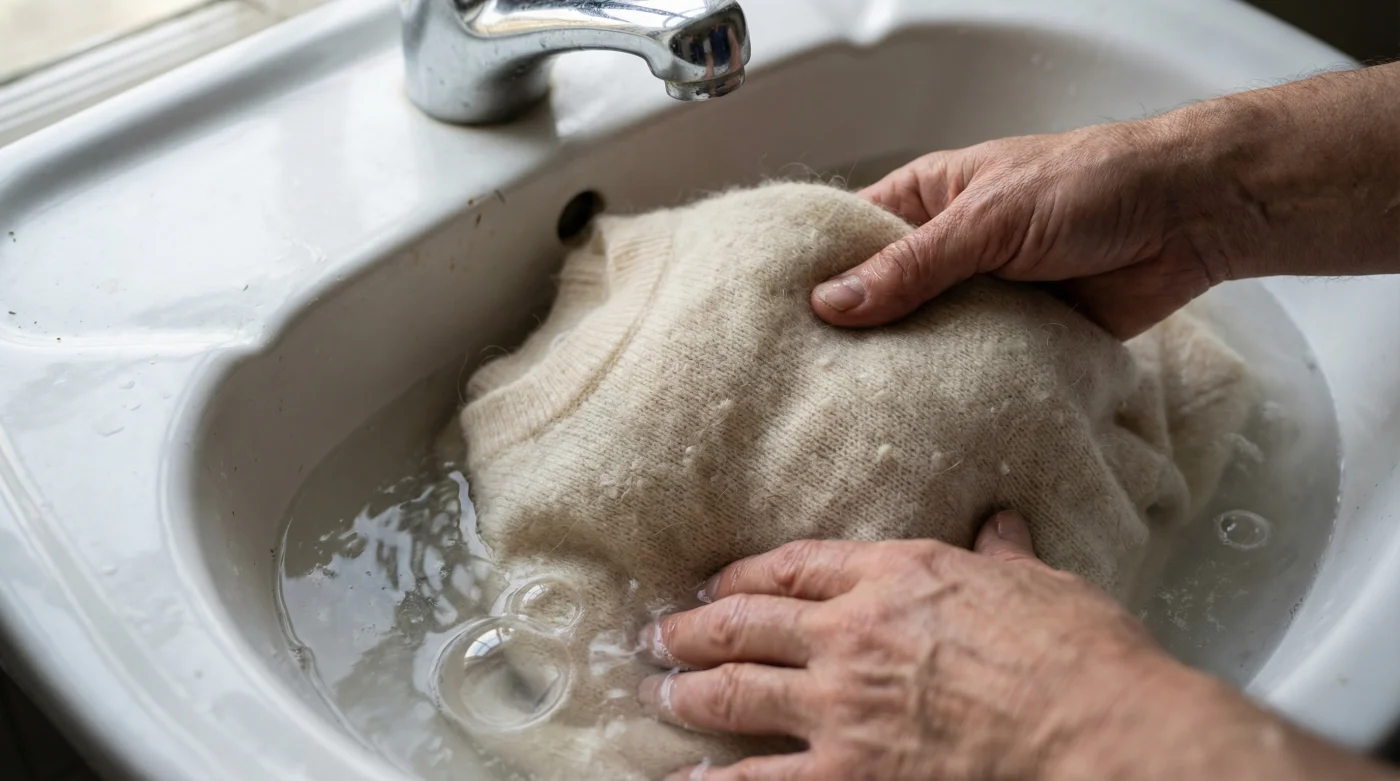
Fill the basin with cool water, ideally hovering around sixty-five degrees Fahrenheit. Add one generous squirt of baby shampoo and swirl your hand through the water until you see a thin, pale layer of suds forming on the surface. Submerge the sweater completely, pressing it down slowly and letting it drink the water naturally until it sinks under its own heavy weight.
Never twist, pull, stretch, or wring the wet fabric. Wet cashmere is remarkably heavy and highly prone to permanent distortion if handled aggressively. Instead, gently press the soapy water through the fibers using the flat palms of your hands. Imagine the motion of breathing through a pillow—a soft, rhythmic compression that moves the water without stressing the yarn. Let it sit peacefully in the bath for fifteen minutes.
Drain the sink and gently press the sweater against the bottom of the basin to push out the dirty, soapy water. Refill the basin with fresh, cool water and repeat the gentle pressing motion to rinse out the shampoo. You know the rinse process is fully complete when the water runs completely clear without a single bubble rising to the surface.
- Water Temperature: Strictly cool, between 60 and 70 degrees Fahrenheit. Warm water shocks the fibers, causing irreversible felting and shrinking.
- The Cleanser: Classic pH-balanced baby shampoo or a dedicated, un-fragranced wool wash. Never use standard laundry detergent, which contains harsh enzymes that eat away at protein-based animal fibers.
- The Towel Roll: Lay the wet, squeezed-out sweater flat on a dry bath towel. Roll the towel up from the bottom like a sleeping bag, pressing down firmly as you go. The dry cotton towel will safely absorb the excess moisture without stretching the delicate knit.
- Drying: Unroll the towel, reshape the damp sweater back to its original dimensions on a dry rack or a fresh, dry towel, and leave it undisturbed in a shaded, well-ventilated room away from direct sunlight or heat vents.
The Bigger Picture of Clothing Care
When you take the maintenance of your clothing into your own hands, you reclaim a small but meaningful slice of personal autonomy. You stop relying on expensive, damaging commercial services and start building a tangible relationship with the objects that furnish your daily life. The sweater stops being just another easily replaceable item in a crowded closet and becomes something you actively nurture and protect.
There is a deep, grounding satisfaction in pulling a perfectly shaped, incredibly soft cashmere sweater over your head on a freezing January morning, knowing you maintained it entirely yourself. You bypass the sharp chemical smells, save a significant amount of money over the season, and extend the garment’s lifespan by several decades, allowing it to age gracefully.
True luxury isn’t about paying someone else a premium to handle your belongings blindly. It is about intimately understanding the raw materials you interact with daily and treating them with a thoughtful, measured hand. When you care for your cashmere through this gentle, cold-water ritual, it doesn’t just survive the harsh winter season; it becomes noticeably softer, far more resilient, and deeply familiar with every single wear.
True fabric care is an act of preservation, not a chemical intervention; when you treat your sweaters with the same gentle respect as your own skin, they will outlast you.
| Key Point | Detail | Added Value for the Reader |
|---|---|---|
| Dry Cleaning Chemicals | Perchloroethylene strips natural lipids from goat hair. | Prevents premature pilling, coarseness, and fading of expensive garments. |
| The Care Label Myth | Dry Clean Only protects the brand from machine-wash liability. | Empowers you to safely ignore restrictive tags and use better at-home methods. |
| Baby Shampoo Hack | pH-balanced, mild formula cleans without dehydrating fibers. | Saves hundreds of dollars annually while doubling the lifespan of the knit. |
Frequently Asked Questions
Can I use regular hair shampoo instead of baby shampoo?
Regular shampoos often contain heavy silicones and artificial fragrances that coat the fibers; stick to mild, un-fragranced baby shampoo to keep the cashmere breathable.What happens if I accidentally use warm water?
Warm water causes the microscopic scales on the animal hair to open and lock together, resulting in permanent shrinking and a stiff texture known as felting.How do I fix a cashmere sweater that has already shrunk?
While severely felted cashmere cannot be saved, slightly shrunken pieces can be soaked in cool water with a tablespoon of hair conditioner and gently stretched back into shape while damp.Is it safe to hang my cashmere sweater on a padded hanger?
Never hang cashmere, even on padded velvet hangers, as the constant weight of the fabric will pull the shoulders out of shape over time; always fold them flat.How often should I actually wash my sweaters during the winter?
Unless you spill something directly on the fabric or sweat heavily, washing once or twice a season is perfectly adequate; natural cashmere is remarkably odor-resistant.